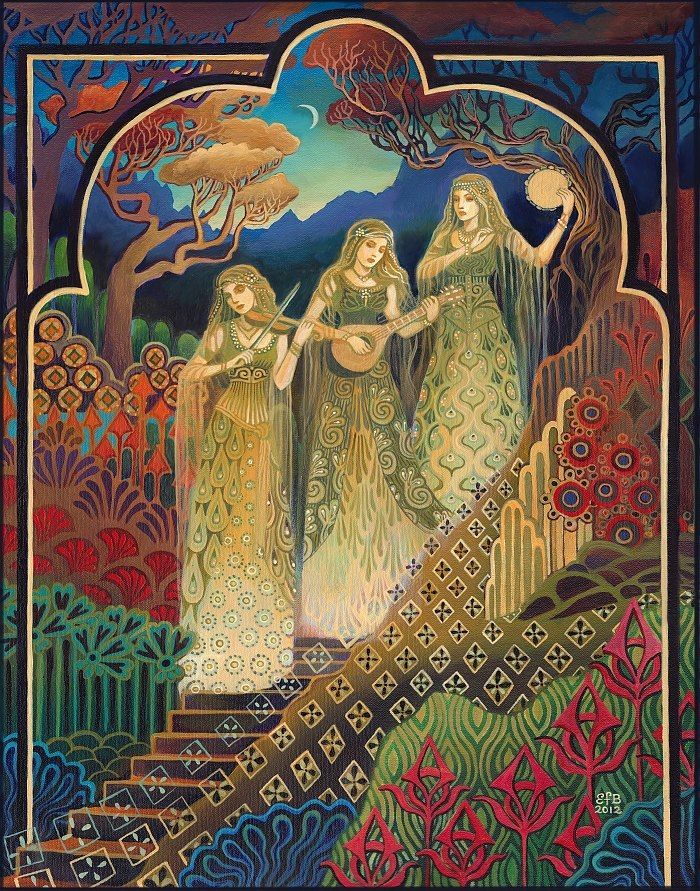
“Thou shalt love the Lord thy God with all thy heart, and with all thy soul, and with all thy mind, and with all thy strength: and Thou shalt love thy neighbor as thyself.”
Matthew 22:37-39 KJV
The Art of Love – Dr. Douglas Gabriel
Love is simple and infinitely complicated, easy to receive and sometimes difficult to share, often claimed for the self when she belongs wholly to the selfless, frequently imagined to be human but solely divine. Love is the eternal ubiquitous question that is never fully answered, the puzzle with infinite pieces longing to show a vision of the holy and moral forces of the cosmos – the beauty and epiphany of God. Even Socrates was humbled before his teacher Diotima and sat at her feet to learn the Art of Love. Pericles knelt before his Aspasia as his divine mistress of love, as did Orpheus before Eurydice, Eros before Psyche, Justinian before Theodora, and the Greeks before Aphrodite.
The might of Love is universally acknowledged as the greatest power on Earth or in the heavens. The gods and goddesses trembled before the arrows of Love and the power of Venus and Cupid. No one has yet to fathom Love’s limits or plumb her depths but many have died trying. The gods themselves are swayed by Love of a celestial type, perhaps more etherial and divine but still a force of attraction that brings the pantheon to its knees. Love is blind for those of wandering heart, steadfast and immortal for the loyal and truth, and always the best of the good that could be done at any moment. Truth, beauty, and goodness bow down before her, for she binds them together as the august power running through all creation. Even Mother Wisdom, in her mantle of wonder and grace, seeks the communion of Love through every being alive. Love creates, Love endures, Love stands beneath all that there is as the foundation stone of eternity.
There is no greater question to pursue, holy grail to seek, or treasure to be found than Love. To know her deeply is as profound as the search for Wisdom by philosophers and saints. We inherently desire to find the Temple of Wisdom so that we might study the nature of Love throughout her mysterious ways.
We shall present numerous descriptions of Love to begin our spiritual journey up the seven-story mountain of the spirit to surmount the summit from which we might look out upon the kingdom of Love and her inhabitants.
The first source we will access is The Gospel of Sophia trilogy to glean a backdrop upon which to frame a description of Love, through her many faces.

From: The Gospel of Sophia, The Biographies of the Divine Feminine Trinity, by Tyla Gabriel, N.D., Our Spirit, 2014.
Intuition comes to birth as love.
Intuition is pure love. Humans have the capacity to create images of the divine as great Imaginations, to hear divine music through Inspiration, and to perform divinely inspired moral deeds through loving Intuitions. When a human loves, all three soul forces are active. The loving person is using spiritual forces to serve as a divine vehicle in this world. Love is the highest human capacity. It links all aspects of the human being as a threefold unity, a trinity. In the moment they love, humans are divine. Of course, this love is the universal love we have discussed previously; not some personal, possessive desire disguised as love.
Love is an endless fountain of nourishment, support, and comfort. The small human ego does not love; it simply likes or dislikes. More often than not, it chooses to like that which is most similar to itself. Desire, too, often masks itself as love to the undiscerning. Sympathy and antipathy rule the soul like the forces of a rollercoaster, racing up and down and side to side with no center and possibly terror at every turn. The common soul follows whatever the fickle eye sets its longing upon, never realizing that desire can be satiated but for a fleeting moment. Desire passes, like the rollercoaster ride. It is anything but stable.
We have heard about the allure of Beauty and the unfortunate path we may tread if we grab beauty and try to hold desire. The misunderstanding of love is the greatest challenge that humanity has ever faced.
Love both starts and ends with selflessness. Individual love is based on selfish desire, personal gain, and self-protection. For many, love is an emotional equation, a calculated balancing act. They only love while they are being loved. When the individual soul believes the other does not love her anymore, or does not love her with equal interest, the balance tips and she, too, ceases to love. This kind of love begins and ends in selfishness. The irony is that this type of love was never really love at all. Far from it.
How difficult it is that no one can teach love to another so that they might understand. You can only give love away. It cannot be held fast, accumulated, or hidden away in a safe place. Love is infinitely available to the one who wishes to give it, and yet humans imagine that they create or control it, showing no more understanding than a newborn who knows not why people give her love.
All humans are worthy of infinite love, but most do not know how to give or receive it. Instead of simply giving it, they spend a great deal of their life trying to find it in the first place. Love is a simple gift. When you give it away freely, you will experience bliss and unity of soul and spirit. A uniting force, love joins the threefold soul forces of thinking, feeling, and willing, transforming the Earthly human into a heavenly angel.
Love is the meaning of life. It is created by the hierarchy called the Seraphim, the Beings of Love. As the highest of the nine hierarchies, the Seraphim are the most powerful, pervasive, and supreme hierarchy. Love reaches far beyond the confines of our solar system. It unites with the Beings of Harmony, the Cherubim, and the Beings of Pure Will Power, the Thrones, to manifest and maintain the divine evolutionary plan. Existing outside of time and space, these beings live in the forces of the Trinities and directly communicate with Them.
The Holy Sophia manifests as the Goddess of Love, the Mother of God, the Queen of Heaven and the Most Holy Trinosophia, the third face of the twelve facets of Sophia. To understand the Goddess of Love, one must understand what love truly is. The foregoing description about the nature of love is far beyond what most are capable of feeling for other human beings. It is closer to what they might feel in their hearts for the divine. To someone who has not experienced them, these pure streams of love are indescribable. True love is like light seen for the first time by a person bereft of sight. One who gives divine love is carried into a heavenly realm, right here on the Earth. Heaven comes to Earth. New Jerusalem descends closer to those who know how to love freely, co-creating with divine will. Without this experience, the spiritual seeker will not be able to understand most of Sophia’s higher aspects manifesting in the great Wisdom of the cosmic Sophia Christos Mysteries.
The Holy Sophia has taken the same vow as Quan Yin, which is not to enter heaven until all other beings have been helped to enter before Her. She wants every soul to rise to the spirit, to arrive in time for the wedding feast. Her most powerful tool is love. She is love. She gives and teaches love. She records its effects. She always supports the labors of love, anywhere that love alights. Love is the active force of the Holy Sophia, who grows more powerful as humans spiritually evolve. No one but She is more interested and supportive of one’s personal and spiritual development.
To love another is to suffer the other’s pains and help him carry his load. The Holy Sophia learned about love from the author of love Himself, Christ Jesus. She witnessed all aspects of Christ’s mystical life: His descent from heaven, His suffering and passion, His descent into hell, and His resurrection and ascension. Throughout all of these events, the Holy Sophia was there with Christ, sharing in the experience, writing it into the book of living memory that never fades from the realm of the super-etheric. His deeds fed Her own development. Once He had left, He sent the Holy Spirit to wed the Holy Sophia. In that sacred marriage, love and wisdom united.
The Comforter and the Holy Sophia are ever-present for each human who can rise to perceive them. It was the Wisdom of the Mother of Christ to gather in the upper room as Jesus had told them to do. It was the living presence of Christ, the Holy Spirit, that lit the tongues of fire above the apostles’ heads and gave them the ability to speak as angels. Wisdom is the foundation upon which true love is built and the flame of the spirit ignited.
As the aspirant wishes to understand the Holy Sophia aspect of the Divine Feminine Trinity, she must develop herself into a worthy vessel or grail that can receive and hold the spiritual archetypes of the activity of the Goddess of Love. Again, this is no earthly or fallen Olympian Goddess of Love, but the Goddess of Love who loves each one of us separately and collectively. The original aspect of Aphrodite was the creator of humanity who stood virgin, beautiful, and naked before the Greek mythographer. She birthed herself from the genitals of Uranus, the sky god, which had been thrown into the ocean. The ocean was her home because she, like other ocean titans, could shape-shift and take on any form, which explains why she could be the form of the most beautiful goddess.
Aphrodite, the Goddess of Love, comes as an offering of the ocean, bringing only the true, the good, and the beautiful to humanity. All beings fall in love with Aphrodite upon sight because she is the representation of the perfect human in all its glory, ascending into heaven. As the heavenly gift of love to humanity, Aphrodite is the story of the Holy Sophia come to the Earth. People have tried every trick to catch this heavenly beauty, but love cannot be held by anyone.
Humanity’s intellectual development is a love affair with the Holy Sophia. Every time one advances in significant thinking, the Holy Sophia passes through him. She embodies his unique efforts so that the thought or idea will be perfectly memorialized for all who rise up to the super-etheric realm. Steiner refers to this idea as spiritual economy.
True Intuition should always appear through love and work for the betterment of spiritual purposes. It should provide the experience of new forces of love and life that help fulfill the divine designs. When an aspirant has a truly valid Intuition, she has entered the realm of the Archai or the Spirit of the Times, the Zeitgeist. Far beyond space and time, where there is not a single hint of the Earthly, these Beings pervade a dimension where Christened Beings exist. Here, there is direct communion with the higher hierarchies through consciousness. A human can only exist in this realm for a tiny moment, yet be filled with years of insight
Only the motivation of love can help stimulate Intuition, for only love has the moral force to inspire the actions that accompany an Intuition. One must have love of the spirit and courage in the will. It takes a selfless person who is devoted to the divine to experience authentic Imagination, Inspiration, or Intuition.
Love flows through a grateful soul. Anyone alive who can stand, speak, and think should be grateful for the gifts with which nature has endowed them. A lack of gratitude leads to isolation and illness. Love is the universal panacea and alchemical fire that tempers the heart’s gold. No interaction in nature is without love. All life, death, and rebirth are gifts of the divine through love. Nature knows the call of love, but many humans refuse to listen. They claim to be deaf to love’s call. Nature loves incessantly. The wind loves the wings of birds. The grass loves the sun. The ocean loves every creation therein. Yet humans often have difficulties in loving themselves or one another.
Love works strongly through the forces of levity to elevate the soul into spiritual vibrations that are more harmonious than earthly ones. Levity gives wings to the soul to rise to the heavenly mountain on high. Wings are the will of the divine raising each hierarchical rank up to the next. Humans become angels when we are given the reward of our well-earned wings.
The greatest force and beingness in creation is love. That is why Christ’s teachings can be distilled into one law: to love. Love God. Love yourself. Love others. This is the supernatural spiritual law that only alights in this realm through efforts of compassion, long suffering, and understanding. Love is undefinable. Its scope of power knows no limits in time or space. It lives on after death and into future incarnations. Love knows, through vibratory resonance, the soul nature of the ones we have loved before and will love in the future.
We often reincarnate with a group of similarly minded spirits who have established karmic patterns together. It is as though some friends and lovers were cuttings from the same tree, a mother tree of sympathetic resonance that is morphologically tuned to patterns of thought and oral traditions. We are often called back into the same patterns of life again and again until we learn to recognize the pattern and adapt. Providence is love manifesting over time with the Wisdom to find the seeds of karma in the ocean of destiny. In this realm, the spirit’s greater designs weave Wisdom and love into karma’s life patterns that help fate take its course. This is the realm of Christ, called the Life Spirit, where continuous love flows as a River of Life from a central fountain nourishing all who enter the city. This is the super-etheric realm, or Shamballa, where the Tree of Life grows. This is a source of love.
In a universe that does not waste energy, the most effective energy in life is love. Love specifically supports and uplifts life. It gives humans the strength to endure suffering and pain and rise to higher qualities and virtues. Love can be blind to pain. With its softness, it smooths over the roughest suffering of a lifetime. Without love, everything earthly can be seen as pain, entropy, and mechanistic laws of nature, devoid of purpose.
Once love has opened the heart to new dimensions, when the mind is aware of new possibilities, anything is possible, even becoming divine. Love is the flow of all good things. It leaves pain and suffering behind and continually mounts to new heights. Love is in the supermassive black hole of destruction and the ion jet of creation—joined equally. Love holds no respect for cast, creed, or station in life. It rules both the human and divine. Without love flowing through them, even the gods would lack the power or courage to face suffering. All existence comes into being through spirit falling or dying into matter, but all existence is maintained with life through love. Existence kills; love brings life. This means that one with abundant love can give it to another to sustain, feed, and nourish him without ever diminishing his life energies.Love is the ultimate source of sustainable and renewable energy in the universe.
The forces of nature love what they do because they are beautiful and filled with goodness and Wisdom. The galaxy loves the spiral design of the flowing disc and tessellates it lovingly until nesting a beautiful form like a Mandelbrot set, perfectly amidst Julia sets (spirals).
Nature loves to repeat Herself. She uses the same archetypes, but with infinite diversity. All things in nature wish to grow and become more of themselves. This is the first rule of life—propagate or the species dies. Natural law loves to replicate and create more of itself, just for the sake of life. Life loves what it does; this love drives the universe. The beauty of a Julia set, found in galaxies and flowing fluids, is an aspect of the Beauty of Sophia. To see the same Wisdom in the small and, conversely, the large, is to know spiritual economy.
Sophia is love. The Holy Sophia is Her personal, intimate, tender love. In the holographic universe of wisdom, beauty, and love, large and small are the same. The human being is co-creator with this loving universe; we maintain our own kingdoms in like fashion. Because modern culture has divorced us from our ancestral Wisdom, we may not understand Wisdom in our lives. We may not recognize what is beautiful due to the assault against Her image, but we all still know love when it moves through us and brings divine sustenance into our lives.
Love is an unforgettable quality. It flows around us; we have the choice to access it at every turn. Love is undying, and every act of love is eternal. Love flows together with divine mercy and grace. Between these qualities, all the forces of health, energy, and nourishment that any soul could need exist. The three spirit forces do not need to be earned. They are given freely and abundantly to humanity without measure. Much like the characteristics of love that we have described, all three gifts flow through a human being from the divine. Grace and mercy are endless fountains of life. They sustain goodness that defies explanation, yet have an immediate effect upon an individual’s soul and spirit.
When one receives these spiritual gifts, he is filled with gratitude and becomes capable of passing these virtues on to others. These are eternal fountainheads of the Water of Life that deliver immortality to the spirit. The gods themselves drink from these waters. They flow through their being to all others in need. The hierarchies participate in loving symbiotic relationships that feed their needs so that they can feed ours. Truly, our gifts to the gods are a type of spiritual nourishment to them, just as their love, grace, and mercy are food and drink for our spirit. Love feeds all is the lesson of the Holy Sophia as She manifests as the Goddess of Love.
Love
Your fiery heart-wheel sparks lightning bolts of love
Igniting every monad of my being,
Beckoning me into the milky-spiral of flowing love,
Falling, swimming, drowning in our sensual veils of ecstasy,
Til all time bends and swirls into a tunnel of procreative power
Reaching the beginning and end at once,
Spread evenly over the skin of the universal beloved,
“We are One” we hear, and are answered as many spirits watch
And move through our glance, our touch, our union.
The bliss of emptiness piercingly pollenates my thoughts
And joyously illuminates the imaginal into unbound fantasy,
Whirling and stoking my feelings aflame with the wonder of love;
Igniting the cause of our affection, the truth of our joining.
You are the aurora of love dawning in the wedding dance of the blessed,
The eyes that are my calm port in a world of spinning madness,
Drunk with the dew of life lingering on your freshly kissed lips,
Love flowing in between, and through, and in and out of –
Secret places, warmed by heart-fire, inward and deep,
Where all wounds reach and end and new joys begin,
That gentle mercy, arising when we touch and lingering when we hold,
A grace that dispels unhappy memories while enkindling spirit effulgence,
Born again through the love we have been waiting for,
A love moving beneath our feet, spanning the heights of heaven,
Turning us round again, to dance the sacred song, together as one.
From: The Gospel of Sophia, Sophia Christos Initiation, Tyla and Douglas Gabriel, Entering the Temple of Wisdom, Pillar Two, Our Spirit, 2016.
“Love is also called: Charity – Loving Kindness – Loyalty – Empathy – Trust – Understanding”
As we learned in Pillar One, compassion and humility are both required for the first stage of spiritual development. Love is not complete without the wisdom brought by those two qualities alone. The humble initiate has learned that true love goes beyond just thinking about another’s suffering with a compassionate mind. True love inspires action. As in the Buddhist tradition, attachment to material things leads to suffering and pain. In response, compassion leads to the desire to help others alleviate pain. Yet only love takes action to relieve that suffering. For one who suffers, love offers the wisdom to understand suffering and its causal links. That is why the compassionate initiate takes action to alleviate ignorance that leads to suffering—to address the root cause.
When the initiate has developed the ability to become a useful tool of the spirit, sharing love and dispelling ignorance through humility and compassion, the sun pillar in the central position of the Temple of Wisdom will be kindled to illuminate the expanse of the entire temple and its many rooms. To embody love is to stand upright in the spiritual world. It is to see the true place of humanity as the central pillar of the Temple of Wisdom. This analogy is somewhat visual and limited, but the similarity of the straightness of a dignified person’s posture could be compared to this pillar of love that holds up the entire temple. The Temple of Wisdom is the same as the Temple of Love. All of the love we have ever given others becomes the building material necessary to erect the temple and its sacred spaces.
Love is the central pillar of the universe upon which the outer Temple of Wisdom is built. It is spiritual willpower ruled by the highest hierarchy, the Seraphim. These beings maintain the constancy of creation and the frequency of love channeled through the human heart. To be in synchronicity with this frequency is tantamount to resonating with the divine. Subsequently, the initiate will notice that life, ease, and good health follow. Being out of sync with love creates dissonance and the falling out of ease – disease. Love is the universal panacea and the building blocks of both the inner Temple of Wisdom and the outer Temple of the Universe. Everything in the universe is found in the human being.
If we can go directly into the heart of the temple and stand upright as the Sun, then the wisdom of humility and compassion will stream into us naturally. Love is an ultimate power little understood. The great battle in the spiritual world is waged in the etheric realm. Christ, who is Love, is being crucified by the unconsciousness of humans killing the earth’s etheric body and those of humans through harmful lifestyles.
The War in Heaven is continuous; it has not ended. This battle occurs in human thinking where the self-effulgent, prideful thoughts of Lucifer lead to indulging in personal desires and immediate gratification. Cold, grey Ahrimanic thinking leads us to the shadow-thoughts of electromagnetic wonders that eat the soul. They steal capacities for the warmth needed to create living thoughts that can then birth Imagination. Both Lucifer and Ahriman tempt the aspirant to become polarized and lose the balanced equanimity necessary for spiritual advancement.
Love is the cure for selfish shadow-thinking, warming thoughts through consideration of others.
Through humility and compassion, love serves our higher nature. Sparked by selfless deeds and tended with loyal devotion, humility, compassion, and love are spiritual fires that must constantly be tended and rekindled. The lamp of the bridesmaids awaiting the groom is a good analogy for the tending of the heart lamp, the hearth of the soul. We are all vestal virgins tending our sacred fires with wisdom and love. Thinking is the spark that lights the fires of imagination in the heart. When the fiery heart kindles a blaze, thoughts become wondrous fountains of illumination that brighten the soul.
Love immediately dispels pride, envy, and jealousy. Yet, the jealous person has no love because she cannot accept self-love as a foundation. That is why understanding pride, envy, and jealousy is crucial to combating vices so that they can be replaced with the higher virtues of humility, compassion, and love. Envy and pride cannot exist in the Temple of Wisdom. Only love can win the battle against the selfish and fearful forces raging in the soul. In each human soul the battle rages: St. George and the Dragon, Michael and Lucifer, or the Woman Clothed with the Sun and the Apocalyptic Dragon. Much can be gained by learning to warm human thoughts so that archetypal beings are invited to descend and dwell in the holy of holies—the human heart.
It is not the head where angels alight; it is the heart. Thoughts are only reflected in the cosmic dome of the human head once they have been warmed in the heart, the altar of consciousness and the mind. People filled with love have the ability to understand (stand under) the thoughts of everyone. Humility and compassion open the gates of the soul to listen and understand words, thoughts, and ideas of others. The initiate who enters the Temple of Wisdom through the door of love has wisdom and understanding as higher soul aspects of thinking.
Right thinking, right attitude, and right action are found through love, because the initiate knows that love unites thinking, feeling, and willing. When thoughts are alive, true, and connected to goodness, then love alights in thinking. This is called intuition, or alignment with the universal divine will. The universal is greatly concerned with the small, no matter how tiny. Each spiritual thought is a light that defeats darkness—wisdom slaying ignorance.
The virtues are antidotes to vices. Firmly disarming pride and envy creates the possibility to enter the gate of the Sun, love, to the Temple of Wisdom. The compassionate and humble Initiate of the Sun of Love has developed spiritual courage and the loving kindness for all beings to serve their spiritual needs. This connection to the spirit enables the initiate to depend more on the higher virtues. This will be important, as battles of light and dark rage in the hearts of humanity. Each moment, souls are both saved and lost. Thinking is the battlefield and, in time, love will be the victor.
On Love
“There is no fear in love; but perfect love casteth out fear: because fear hath torment. He that feareth is not made perfect in love.” 1 John 4:18
“Love is a spirit of all compact of fire.” William Shakespeare
“A coward is incapable of exhibiting love; it is the prerogative of the brave.” Mahatma Gandhi
“Love spends his all, and still hath store.” Philip James Bailey
“I never knew how to worship until I knew how to love.” Henry Beecher
“The hunger for love is much more difficult to remove than the hunger for bread.” Mother Teresa
“Love is the triumph of imagination over intelligence.” H. L. Mencken
“A man is only as good as what he loves.” Saul Bellow
“Love is my religion—I could die for it.” John Keats
“With love and patience, nothing is impossible.” Daisaku Ikeda
“The pain of love is the pain of being alive. It is a perpetual wound.” Maureen Duffy
“Love consists in this, that two solitudes protect and touch and greet each other.” Ranier Maria Rilke
“To love is to receive a glimpse of heaven.” Karen Sunde
“The first principle of life is love. The second principle is kindness. The third principle is compassion. The fourth principle is trust.” Anon
“Love is characterized by freedom. Lovingkindness, compassion, appreciative joy, and a particular form of equanimity are the four kinds of love.” Buddha.
“Place me like a seal over your heart, like a seal on your arm; for love is as strong as death, its jealousy unyielding as the grave. It burns like blazing fire, like a mighty flame. Many waters cannot quench love; rivers cannot sweep it away. If one were to give all the wealth of one’s house for love, it would be utterly scorned.” Song of Solomon 8:6-7
“But besides this purest Soul, there must be also a Soul of the All: at once there is another Love- the eye with which this second Soul looks upwards- like the supernal Eros engendered by force of desire. This Aphrodite, the secondary Soul, is of this Universe- not Soul unmingled alone, not Soul, the Absolute, giving birth, therefore, to the Love concerned with the universal life; no, this is the Love presiding over marriages; but it, also, has its touch of the upward desire; and, in the degree of that striving, it stirs and leads upwards the Souls of the young and every Soul with which it is incorporated in so far as there is a natural tendency to remembrance of the divine.” Enneads by Plotinus
1 John 4:8: “Anyone who does not love does not know God, because God is love.”
Colossians 3:14: “And above all these put on love, which binds everything together in perfect harmony.”
John 15: 9-13: “As the Father loved Me, I also have loved you; abide in My love. If you keep My commandments, you will abide in My love, just as I have kept My Father’s commandments and abide in His love. These things I have spoken to you, that My joy may remain in you, and that your joy may be full. This is My commandment, that you love one another as I have loved you. Greater love has no one than this, than to lay down one’s life for his friends.”
1 Corinthians 13: 1-13: “Though I speak with the tongues of men and of angels, but have not love, I have become sounding brass or a clanging cymbal. And though I have the gift of prophecy, and understand all mysteries and all knowledge, and though I have all faith, so that I could remove mountains, but have not love, I am nothing. And though I bestow all my goods to feed the poor, and though I give my body to be burned, but have not love, it profits me nothing.
Love suffers long and is kind; love does not envy; love does not parade itself, is not puffed up; does not behave rudely, does not seek its own, is not provoked, thinks no evil; does not rejoice in iniquity, but rejoices in the truth; bears all things, believes all things, hopes all things, endures all things. Love never fails. But whether there are prophecies, they will fail; whether there are tongues, they will cease; whether there is knowledge, it will vanish away. For we know in part and we prophesy in part. But when that which is perfect has come, then that which is in part will be done away. When I was a child, I spoke as a child, I understood as a child, I thought as a child; but when I became a man, I put away childish things. For now we see in a mirror, dimly, but then face to face. Now I know in part, but then I shall know just as I also am known. And now abide faith, hope, love, these three; but the greatest of these is love.”
The Five Stages of Love According to Ancient Hindu Philosophy
There are very interesting stories and origins of love in Hinduism. One is that a super-being used to live, known as ‘Purusha,’ who had no desire to do anything as the created universe was perfect and complete. Lord Brahma took things into his hands and split Purusha in two. The Sky separated from the Earth, the darkness separated from light, the life separated from death, and finally, the male separated from the female. Each of the halves then went on a quest to satisfy itself by reuniting with its other half.
The ancient philosophers of Hindu dharma propose five stages of a lover’s journey as mutually exclusive and that we don’t need to renounce physical love and romance to pursue higher love. When we develop ourselves in these five stages, we only free ourselves from the attachment of physical romance and thus can live love most unconditionally. Bhakti Yoga during the 15th century found that love transits through five different stages. These stages are:
Kama – Sensory Craving – The desire to merge initiates from physical attraction. The Kama means “craving for sense objects.” Hindu dharma doesn’t associate sex with shame; it is a positive aspect of human existence. The sages agree that kama can be a goal of Hindu life, but it is not the sole factor that can lead to wholeness.
Shringara – Rapturous Intimacy – This is where the Indian sages focused on the emotional content and developed a rich context to understand the moods and emotions, which is romance. The erotic attraction from just sensory cravings is stirred up when they share secrets, make affectionate names of another, play games, and exchange gifts. This imaginative play of love is symbolized by the relationship between Radha and Krishna, where they are involved in adventure, music, dance, poetry, and many other romantic gestures.
Maitri – Generous Compassion – Compassion is just like the natural love we feel towards children and pets. The “Matru-Prema,” which in Sanskrit means motherly love, is the kind of love that is most giving and least selfish. Maitri is the motherly love, not just for your partner or children but for all living beings. And when you are more compassionate with everyone, you become even more compassionate with your partner.
Bhakti – Impersonal Devotion – The ancient sages went beyond interpersonal love and envisioned a form of love that expanded to the whole of creation. This path to finding this love is known as “Bhakti Yoga,” where you are not only cultivating the love for others but also for the love of God. The love of God can be the highest form of kindness, truth, or justice. Saints and sages of the past were passionate and committed to these highest forms of truth, kindness, and justice.
Atma Prema – Unconditional Self-Love – The love that started by directing towards others is again directed towards the inside – the self. Atma Prema could be translated as self-love. This means that what we see in others, we see others in ourselves. Once we achieve self-love, we recognize that we are all one. Atma-Prema leads us to understand that we are part of the Purusha, and we are the children of the highest. Thus, when we love ourselves and others most profoundly, the love knows no boundaries and thus becomes unconditional.
Aphrodite the Goddess of Love
Aphrodite was an ancient Greek goddess associated with love, lust, beauty, pleasure, passion, procreation, and as her syncretized Roman goddess counterpart Venus, desire, sex, fertility, prosperity, and victory. In Hesiod’s Theogony, Aphrodite is born off the coast of Cythera from the foam produced by Uranus’s genitals, which his son Cronus had severed and thrown into the sea. In Homer’s Iliad, however, she is the daughter of Zeus and Dione. Plato, in his Symposium, asserts that these two origins actually belong to separate entities: Aphrodite Ourania (a transcendent, “Heavenly” Aphrodite) and Aphrodite Pandemos (Aphrodite common to “all the people”).
The cult of Aphrodite in Greece was imported from, or at least influenced by, the cult of Astarte in Phoenicia, which, in turn, was influenced by the cult of the Mesopotamian goddess known as “Ishtar” to the East Semitic peoples and as “Inanna” to the Sumerians. Pausanias states that the first to establish a cult of Aphrodite were the Assyrians, followed by the Paphians of Cyprus and then the Phoenicians at Ascalon. The Phoenicians, in turn, taught her worship to the people of Cythera. Aphrodite took on Inanna-Ishtar’s associations with sexuality and procreation. Furthermore, she was known as Ourania, which means “heavenly”, a title corresponding to Inanna’s role as the Queen of Heaven. Early artistic and literary portrayals of Aphrodite are extremely similar on Inanna-Ishtar. Like Inanna-Ishtar, Aphrodite was also a warrior goddess; in Sparta, Aphrodite was worshipped as Aphrodite Areia, which means “warlike”.
Some early comparative mythologists opposed to the idea of a Near Eastern origin argued that Aphrodite originated as an aspect of the Greek dawn goddess Eos and that she was therefore ultimately derived from the Proto-Indo-European dawn goddess Haéusōs (properly Greek Eos, Latin Aurora, Sanskrit Ushas). Both Aphrodite and Eos were known for their erotic beauty and aggressive sexuality and both had relationships with mortal lovers. Aphrodite rising out of the waters after Cronus defeats Uranus as a mytheme would then be directly cognate to the Rigvedic myth of Indra defeating Vrtra, liberating Ushas. Another key similarity between Aphrodite and the Indo-European dawn goddess is her close kinship to the Greek sky deity since both the main claimants to her paternity (Zeus and Uranus) are sky deities. During the Hellenistic period, the Greeks identified Aphrodite with the ancient Egyptian goddesses Hathor and Isis.
According to the version of her birth recounted by Hesiod in his Theogony, Cronus severed Uranus’ genitals and threw them behind him into the sea. The foam from his genitals gave rise to Aphrodite, while the Giants, the Erinyes (furies), and the Meliae (nymphs) emerged from the drops of his blood. After Aphrodite was born from the sea-foam, she washed up to shore in the presence of the other gods.
Aphrodite is almost always accompanied by Eros, the god of lust and sexual desire. In his Theogony, Hesiod describes Eros as one of the four original primeval forces born at the beginning of time, but, after the birth of Aphrodite from the sea foam, he is joined by Himeros and, together, they become Aphrodite’s constant companions. In early Greek art, Eros and Himeros are both shown as idealized handsome youths with wings. The Greek lyric poets regarded the power of Eros and Himeros as dangerous, compulsive, and impossible for anyone to resist. In modern times, Eros is often seen as Aphrodite’s son, but this is actually a comparatively late innovation. The Romans, who saw Venus as a mother goddess, seized on this idea of Eros as Aphrodite’s son and popularized it, making it the predominant portrayal in works on mythology until the present day.
Aphrodite’s main attendants were the three Charites, whom Hesiod identifies as the daughters of Zeus and Eurynome and names as Aglaea (“Splendor”), Euphrosyne (“Good Cheer”), and Thalia (“Abundance”). The Charites had been worshipped as goddesses in Greece since the beginning of Greek history, long before Aphrodite was introduced to the pantheon. Aphrodite’s other set of attendants was the three Horae (the “Hours”), whom Hesiod identifies as the daughters of Zeus and Themis and names as Eunomia (“Good Order”), Dike (“Justice”), and Eirene (“Peace”). Aphrodite was also sometimes accompanied by Harmonia, her daughter by Ares, and Hebe, the daughter of Zeus and Hera.
The Greek Varieties of Love
Ancient Greek philosophers identified a variety of forms of love: essentially, familial love (in Greek, Storge), friendly love or platonic love (Philia), romantic love (Eros), self-love (Philautia), guest love (Xenia), and divine or unconditional love (Agape). Modern authors have distinguished further varieties of love: unrequited love, empty love, companionate love, consummate love, infatuated love, self-love, and courtly love.
Agape. orunconditional love, is sometimes called “God Love” and it is the highest form of love.
Itmeans love in modern-day Greek. The term s’agapo means I love you in Greek. The word agapo is the verb I love. It generally refers to a “pure,” ideal love, rather than the physical attraction suggested by eros. However, there are some examples of agape used to mean the same as eros. It has also been translated as “love of the soul.” Agape, or love for everyone or selfless love was extended to all people, whether family members or distant strangers. Agape was later translated into Latin as caritas, which is the origin of our word “charity.” It also appears in other religious traditions, such as the idea of metta or “universal loving kindness” in Theravada Buddhism.
Eros generally refers to sexual passion named after the Greek god of fertility who represented the idea of sexual passion and desire. Eros was viewed as a dangerous, fiery, and irrational form of love that could take hold of you and possess you. Eros involved a loss of control that frightened the Greeks. The Greek word erota means in love. Although eros is initially felt for a person, with contemplation it becomes an appreciation of the beauty within that person, or even becomes appreciation of beauty itself. Eros helps the soul recall knowledge of beauty and contributes to an understanding of spiritual truth. Lovers and philosophers are all inspired to seek truth by Eros.
Eros appears in ancient Greek sources under several different guises. In the earliest sources (the cosmogonies, the earliest philosophers, and texts referring to the mystery religions), he is one of the primordial gods involved in the coming into being of the cosmos. In later sources, however, Eros is represented as the son of Aphrodite, whose mischievous interventions in the affairs of gods and mortals cause bonds of love to form, often illicitly. Ultimately, in the later satirical poets, he is represented as a blindfolded child. According to Hesiod’s Theogony (c. 700 BC), one of the most ancient of all Greek sources, Eros (the god of love) was the fourth god to come into existence, coming after Chaos, Gaia (the Earth), and Tartarus (the abyss). Aristophanes (c. 400 BC), relates the birth of Eros:
“At the beginning there was only Chaos, Night, dark Erebus, and deep Tartarus. Earth, the air and heaven had no existence. Firstly, black-winged Night laid a germless egg in the bosom of the infinite deeps of Erebus, and from this, after the revolution of long ages, sprang the graceful Eros with his glittering golden wings, swift as the whirlwinds of the tempest. He mated in deep Tartarus with dark Chaos, winged like himself, and thus hatched forth our race, which was the first to see the light.”
In some versions the Orphic Egg which contains Eros is created by Chronos, and it is Eros who bore Nyx as his daughter and took her as his consort. Eros was called “Protogonos” meaning “first-born” because he was the first of the immortals that could be conceived by man and was thought of as the creator of all other beings and the first ruler of the universe. Nyx bore to Eros the gods Gaia and Ouranos. Eros passes his scepter of power to Nyx, who then passes it to Ouranos. The primordial Eros was also called Phanes (‘illuminated one’), Erikepaios (‘power’), Metis (‘thought’) and Dionysus. Zeus was said to have swallowed Phanes (Eros) and absorbing his powers of creation remade the world anew, such that Zeus was then both creator and ruler of the universe. The Orphics also thought that Dionysus was an incarnation of the primordial Eros, and that Zeus passed the scepter of power to Dionysus. Thus, Eros was the first ruler of the universe and as Dionysus he regained the scepter of power once again.
Philia is considered deep friendship which the Greeks valued far more than the base sexuality of eros. It developed between brothers in arms who had fought side by side on the battlefield. It was about showing loyalty to your friends, sacrificing for them, as well as sharing your emotions with them. Philia is dispassionate virtuous love loyal to friends, family, and community, and requires virtue, equality, and familiarity. It is motivated by practical reasons; one or both of the parties benefit from the relationship. It can also mean “love of the mind.” Another kind of philia that embodies the natural affection and love between parents and their children is called Storge.
Ludus is considered playful love and affection between children or casual lovers accompanied by flirting and teasing in the early stages of a relationship. It is also when we sit around bantering and laughing with friends, or when we go out dancing which is almost a playful substitute for sex itself through adult frivolity.
Pragma is longstanding love described as a mature, realistic love that is commonly found amongst long-established couples. Pragma is about making compromises to help the relationship work over a long period of time demonstrating patience and tolerance. It is about standing, not falling, in love and making an effort to give love rather than just receive it.
Philautia is also called “love of the self” which Aristotle said manifested through two types;
one was an unhealthy variety associated with narcissism, where you became self-obsessed and focused on personal fame and fortune; and a second, healthier version enhances your wider capacity to love others. If you love yourself and feel secure you will have plenty of love to give others.
Xenia, or hospitality love, was an extremely important practice in ancient Greece. It was an almost ritualized friendship formed between a host and his guest, who could previously have been strangers. The host fed and provided quarters for the guest, who was expected to repay only with gratitude. The importance of this can be seen throughout Greek mythology because at any time a god or goddess might come to visit your home in disguise. This was also called ‘unconditional hospitality’.
The Art of Love
According to Plato’s Symposium, Diotima, the daimonologist, instructed Socrates on the nature of love saying: “Eros [Love] is a great daimon, O Socrates. For in fact, the entire realm of the daimonic is intermediate between god and mortal…. It has the function of interpreting and conveying things from humans to the gods and from the gods to humans…” Socrates said he called these teachings of Diotima the “Art of Love” which constituted the true understanding of the true, the beautiful, and the good. No better definition of love (Eros) has been found in the Greek teachings than that of the female teacher of Socrates.
From: Symposium, by Plato, 360 BC, translated by Benjamin Jowett
“And now, taking my leave of you, I would rehearse a tale of love which I heard from Diotima of Mantineia, a woman wise in this and in many other kinds of knowledge, who in the days of old, when the Athenians offered sacrifice before the coming of the plague, delayed the disease ten years. She was my instructress in the art of love, and I shall repeat to you what she said to me, beginning with the admissions made by Agathon, which are nearly if not quite the same which I made to the wise woman when she questioned me – I think that this will be the easiest way, and I shall take both parts myself as well as I can. As you, Agathon, suggested, I must speak first of the being and nature of Love, and then of his works. First, I said to her in nearly the same words which he used to me, that Love was a mighty god, and likewise fair and she proved to me as I proved to him that, by my own showing, Love was neither fair nor good.
“What then is Love?” I asked; “Is he mortal?” “No.” “What then?” “As in the former instance, he is neither mortal nor immortal, but in a mean between the two.” “What is he, Diotima?” “He is a great spirit (daimon), and like all spirits he is intermediate between the divine and the mortal.” “And what,” I said, “is his power?” “He interprets,” she replied, “between gods and men, conveying and taking across to the gods the prayers and sacrifices of men, and to men the commands and replies of the gods; he is the mediator who spans the chasm which divides them, and therefore in him all is bound together, and through him the arts of the prophet and the priest, their sacrifices and mysteries and charms, and all, prophecy and incantation, find their way. For God mingles not with man; but through Love all the intercourse, and converse of god with man, whether awake or asleep, is carried on. The wisdom which understands this is spiritual; all other wisdom, such as that of arts and handicrafts, is mean and vulgar.
Now these spirits or intermediate powers are many and diverse, and one of them is Love. “And who,” I said, “was his father, and who his mother?” “The tale,” she said, “will take time; nevertheless I will tell you. On the birthday of Aphrodite there was a feast of the gods, at which the god Poros or Plenty, who is the son of Metis or Discretion, was one of the guests. When the feast was over, Penia or Poverty, as the manner is on such occasions, came about the doors to beg. Now Plenty who was the worse for nectar (there was no wine in those days), went into the garden of Zeus and fell into a heavy sleep, and Poverty considering her own straitened circumstances, plotted to have a child by him, and accordingly she lay down at his side and conceived love, who partly because he is naturally a lover of the beautiful, and because Aphrodite is herself beautiful, and also because he was born on her birthday, is her follower and attendant. And as his parentage is, so also are his fortunes. In the first place he is always poor, and anything but tender and fair, as the many imagine him; and he is rough and squalid, and has no shoes, nor a house to dwell in; on the bare earth exposed he lies under the open heaven, in the streets, or at the doors of houses, taking his rest; and like his mother he is always in distress. Like his father too, whom he also partly resembles, he is always plotting against the fair and good; he is bold, enterprising, strong, a mighty hunter, always weaving some intrigue or other, keen in the pursuit of wisdom, fertile in resources; a philosopher at all times, terrible as an enchanter, sorcerer, sophist. He is by nature neither mortal nor immortal, but alive and flourishing at one moment when he is in plenty, and dead at another moment, and again alive by reason of his father’s nature. But that which is always flowing in is always flowing out, and so he is never in want and never in wealth; and, further, he is in a mean between ignorance and knowledge.
The truth of the matter is this: No god is a philosopher or seeker after wisdom, for he is wise already; nor does any man who is wise seek after wisdom. Neither do the ignorant seek after Wisdom. For herein is the evil of ignorance, that he who is neither good nor wise is nevertheless satisfied with himself: he has no desire for that of which he feels no want.” “But-who then, Diotima,” I said, “are the lovers of wisdom, if they are neither the wise nor the foolish?” “A child may answer that question,” she replied; “they are those who are in a mean between the two; Love is one of them. For wisdom is a most beautiful thing, and Love is of the beautiful; and therefore Love is also a philosopher: or lover of wisdom, and being a lover of wisdom is in a mean between the wise and the ignorant. And of this too his birth is the cause; for his father is wealthy and wise, and his mother poor and foolish. Such, my dear Socrates, is the nature of the spirit Love. The error in your conception of him was very natural, and as I imagine from what you say, has arisen out of a confusion of love and the beloved, which made you think that love was all beautiful. For the beloved is the truly beautiful, and delicate, and perfect, and blessed; but the principle of love is of another nature and is such as I have described.”
I said, “O thou stranger woman, thou sayest well; but, assuming Love to be such as you say, what is the use of him to men?” “That, Socrates,” she replied, “I will attempt to unfold: of his nature and birth I have already spoken; and you acknowledge that love is of the beautiful. But someone will say: Of the beautiful in what, Socrates and Diotima? Or rather let me put the question more dearly, and ask: When a man loves the beautiful, what does he desire?” I answered her “That the beautiful may be his.” “Still,” she said, “the answer suggests a further question: What is given by the possession of beauty?” “To what you have asked,” I replied, “I have no answer ready.” “Then,” she said, “Let me put the word ‘good’ in the place of the beautiful, and repeat the question once more: If he who loves good, what is it then that he loves? “The possession of the good,” I said. “And what does he gain who possesses the good?” “Happiness,” I replied; “there is less difficulty in answering that question.” “Yes,” she said, “the happy are made happy by the acquisition of good things. Nor is there any need to ask why a man desires happiness; the answer is already final.” “You are right.” I said. “And is this wish and this desire common to all? and do all men always desire their own good, or only some men? – what say you?” “All men,” I replied; “the desire is common to all.” “Why, then,” she rejoined, “are not all men, Socrates, said to love, but only some of them? whereas you say that all men are always loving the same things.” “I myself wonder,” I said, – why this is.” “There is nothing to wonder at,” she replied; “the reason is that one part of love is separated off and receives the name of the whole, but the other parts have other names.” “Give an illustration,” I said. She answered me as follows: “There is poetry, which, as you know, is complex; and manifold. All creation or passage of non-being into being is poetry or making, and the processes of all art are creative; and the masters of arts are all poets or makers.” “Very true.” “Still,” she said, “you know that they are not called poets, but have other names; only that portion of the art which is separated off from the rest, and is concerned with music and meter, is termed poetry, and they who possess poetry in this sense of the word are called poets.”
“Very true,” I said. “And the same holds of love. For you may say generally that all desire of good and happiness is only the great and subtle power of love; but they who are drawn towards him by any other path, whether the path of money-making or gymnastics or philosophy, are not called lovers – the name of the whole is appropriated to those whose affection takes one form only – they alone are said to love, or to be lovers.” “I dare say,” I replied, “that you are right.” “Yes,” she added, “and you hear people say that lovers are seeking for their other half; but I say that they are seeking neither for the half of themselves, nor for the whole, unless the half or the whole be also a good. And they will cut off their own hands and feet and cast them away, if they are evil; for they love not what is their own, unless perchance there be someone who calls what belongs to him the good, and what belongs to another the evil. For there is nothing which men love but the good. Is there anything?” “Certainly, I should say, that there is nothing.” “Then,” she said, “the simple truth is, that men love the good.” “Yes,” I said. “To which must be added that they love the possession of the good? “Yes, that must be added.” “And not only the possession, but the everlasting possession of the good?” “That must be added too.” “Then love,” she said, “may be described generally as the love of the everlasting possession of the good?” “That is most true.”
“Then if this be the nature of love, can you tell me further,” she said, “what is the manner of the pursuit? what are they doing who show all this eagerness and heat which is called love? and what is the object which they have in view? Answer me.” “Nay, Diotima,” I replied, “if I had known, I should not have wondered at your wisdom, neither should I have come to learn from you about this very matter.” “Well,” she said, “I will teach you: – The object which they have in view is birth in beauty, whether of body or, soul.” “I do not understand you,” I said; “the oracle requires an explanation.” “I will make my meaning dearer,” she replied. “I mean to say, that all men are bringing to the birth in their bodies and in their souls. There is a certain age at which human nature is desirous of procreation – procreation which must be in beauty and not in deformity; and this procreation is the union of man and woman and is a divine thing; for conception and generation are an immortal principle in the mortal creature, and in the inharmonious they can never be. But the deformed is always inharmonious with the divine, and the beautiful harmonious.
Beauty, then, is the destiny or goddess of parturition who presides at birth, and therefore, when approaching beauty, the conceiving power is propitious, and diffusive, and benign, and begets and bears fruit: at the sight of ugliness she frowns and contracts and has a sense of pain, and turns away, and shrivels up, and not without a pang refrains from conception. And this is the reason why, when the hour of conception arrives, and the teeming nature is full, there is such a flutter and ecstasy about beauty whose approach is the alleviation of the pain of travail. For love, Socrates, is not, as you imagine, the love of the beautiful only.” “What then?” “The love of generation and of birth in beauty.” “Yes,” I said. “Yes, indeed,” she replied. “But why of generation?” “Because to the mortal creature, generation is a sort of eternity and immortality,” she replied; “and if, as has been already admitted, love is of the everlasting possession of the good, all men will necessarily desire immortality together with good: Wherefore love is of immortality.”
All this she taught me at various times when she spoke of love. And I remember her once saying to me, “What is the cause, Socrates, of love, and the attendant desire? See you not how all animals, birds, as well as beasts, in their desire of procreation, are in agony when they take the infection of love, which begins with the desire of union; whereto is added the care of offspring, on whose behalf the weakest are ready to battle against the strongest even to the uttermost, and to die for them, and will, let themselves be tormented with hunger or suffer anything in order to maintain their young. Man may be supposed to act thus from reason; but why should animals have these passionate feelings? Can you tell me why?” Again, I replied that I did not know. She said to me: “And do you expect ever to become a master in the art of love, if you do not know this?” “But I have told you already, Diotima, that my ignorance is the reason why I come to you; for I am conscious that I want a teacher; tell me then the cause of this and of the other mysteries of love.” “Marvel not,” she said, “if you believe that love is of the immortal, as we have several times acknowledged; for here again, and on the same principle too, the mortal nature is seeking as far as is possible to be everlasting and immortal: and this is only to be attained by generation, because generation always leaves behind a new existence in the place of the old. Nay even in the life, of the same individual there is succession and not absolute unity: a man is called the same, and yet in the short interval which elapses between youth and age, and in which every animal is said to have life and identity, he is undergoing a perpetual process of loss and reparation – hair, flesh, bones, blood, and the whole body are always changing. Which is true not only of the body, but also of the soul, whose habits, tempers, opinions, desires, pleasures, pains, fears, never remain the same in any one of us, but are always coming and going; and equally true of knowledge, and what is still more surprising to us mortals, not only do the sciences in general spring up and decay, so that in respect of them we are never the same; but each of them individually experiences a like change.
For what is implied in the word ‘recollection,’ but the departure of knowledge, which is ever being forgotten, and is renewed and preserved by recollection, and appears to be the same although in reality new, according to that law of succession by which all mortal things are preserved, not absolutely the same, but by substitution, the old worn-out mortality leaving another new and similar existence behind unlike the divine, which is always the same and not another? And in this way, Socrates, the mortal body, or mortal anything, partakes of immortality; but the immortal in another way. Marvel not then at the love which all men have of their offspring; for that universal love and interest is for the sake of immortality.”
I was astonished at her words, and said: “Is this really true, O thou wise Diotima?” And she answered with all the authority of an accomplished sophist: “Of that, Socrates, you may be assured; – think only of the ambition of men, and you will wonder at the senselessness of their ways, unless you consider how they are stirred by the love of an immortality of fame. They are ready to run all risks far greater than they would have for their children, and to spend money and undergo any sort of toil, and even to die, for the sake of leaving behind them a name which shall be eternal. Do you imagine that Alcestis would have died to save Admetus, or Achilles to avenge Patroclus, or your own Codrus in order to preserve the kingdom for his sons, if they had not imagined that the memory of their virtues, which still survives among us, would be immortal? Nay,” she said, “I am persuaded that all men do all things, and the better they are the more they do them, in hope of the glorious fame of immortal virtue; for they desire the immortal.
“Those who are pregnant in the body only, betake themselves to women and beget children – this is the character of their love; their offspring, as they hope, will preserve their memory and giving them the blessedness and immortality which they desire in the future. But souls which are pregnant – for there certainly are men who are more creative in their souls than in their bodies – conceive that which is proper for the soul to conceive or contain. And what are these conceptions? – wisdom and virtue in general. And such creators are poets and all artists who are deserving of the name inventor. But the greatest and fairest sort of wisdom by far is that which is concerned with the ordering of states and families, and which is called temperance and justice. And he who in youth has the seed of these implanted in him and is himself inspired, when he comes to maturity desires to beget and generate. He wanders about seeking beauty that he may beget offspring – for in deformity he will beget nothing – and naturally embraces the beautiful rather than the deformed body; above all when he finds fair and noble and well-nurtured soul, he embraces the two in one person, and to such an one he is full of speech about virtue and the nature and pursuits of a good man; and he tries to educate him; and at the touch of the beautiful which is ever present to his memory, even when absent, he brings forth that which he had conceived long before, and in company with him tends that which he brings forth; and they are married by a far nearer tie and have a closer friendship than those who beget mortal children, for the children who are their common offspring are fairer and more immortal.
Who, when he thinks of Homer and Hesiod and other great poets, would not rather have their children than ordinary human ones? Who would not emulate them in the creation of children such as theirs, which have preserved their memory and given them everlasting glory? Or who would not have such children as Lycurgus left behind him to be the saviors, not only of Lacedaemon, but of Hellas, as one may say? There is Solon, too, who is the revered father of Athenian laws; and many others there are in many other places, both among Hellenes and barbarians, who have given to the world many noble works, and have been the parents of virtue of every kind; and many temples have been raised in their honor for the sake of children such as theirs; which were never raised in honor of any one, for the sake of his mortal children.
“These are the lesser mysteries of love, into which even you, Socrates, may enter; to the greater and more hidden ones which are the crown of these, and to which, if you pursue them in a right spirit, they will lead, I know not whether you will be able to attain. But I will do my utmost to inform you, and do you follow if you can. For he who would proceed aright in this matter should begin in youth to visit beautiful forms; and first, if he be guided by his instructor aright, to love one such form only – out of that he should create fair thoughts; and soon he will of himself perceive that the beauty of one form is akin to the beauty of another; and then if beauty of form in general is his pursuit, how foolish would he be not to recognize that the beauty in every form is the same! And when he perceives this, he will abate his violent love of the one, which he will despise and deem a small thing, and will become a lover of all beautiful forms; in the next stage he will consider that the beauty of the mind is more honorable than the beauty of the outward form.
So that if a virtuous soul have but a little comeliness, he will be content to love and tend him, and will search out and bring to the birth thoughts which may improve the young, until he is compelled to contemplate and see the beauty of institutions and laws, and to understand that the beauty of them all is of one family, and that personal beauty is a trifle; and after laws and institutions he will go on to the sciences, that he may see their beauty, being not like a servant in love with the beauty of one youth or man or institution, himself a slave mean and narrow-minded, but drawing towards and contemplating the vast sea of beauty, he will create many fair and noble thoughts and notions in boundless love of wisdom; until on that shore he grows and waxes strong, and at last the vision is revealed to him of a single science, which is the science of beauty everywhere. To this I will proceed; please to give me your very best attention:
“He who has been instructed thus far in the things of love, and who has learned to see the beautiful in due order and succession, when he comes toward the end will suddenly perceive a nature of wondrous beauty (and this, Socrates, is the final cause of all our former toils) – a nature which in the first place is everlasting, not growing and decaying, or waxing and waning; secondly, not fair in one point of view and foul in another, or at one time or in one relation or at one place fair, at another time or in another relation or at another place foul, as if fair to some and foul to others, or in the likeness of a face or hands or any other part of the bodily frame, or in any form of speech or knowledge, or existing in any other being, as for example, in an animal, or in heaven or in earth, or in any other place; but beauty absolute, separate, simple, and everlasting, which without diminution and without increase, or any change, is imparted to the ever-growing and perishing beauties of all other things. He who from these ascending under the influence of true love, begins to perceive that beauty, is not far from the end. And the true order of going, or being led by another, to the things of love, is to begin from the beauties of earth and mount upwards for the sake of that other beauty, using these as steps only, and from one going on to two, and from two to all fair forms, and from fair forms to fair practices, and from fair practices to fair notions, until from fair notions he arrives at the notion of absolute beauty, and at last knows what the essence of beauty is.
This, my dear Socrates,” said the stranger of Mantineia, “is that life above all others which man should live, in the contemplation of beauty absolute; a beauty which if you once beheld, you would see not to be after the measure of gold, and garments, and fair boys and youths, whose presence now entrances you; and you and many a one would be content to live seeing them only and conversing with them without meat or drink, if that were possible – you only want to look at them and to be with them. But what if man had eyes to see the true beauty – the divine beauty, I mean, pure and dear and unalloyed, not clogged with the pollutions of mortality and all the colors and vanities of human life – thither looking, and holding converse with the true beauty simple and divine? Remember how in that communion only, beholding beauty with the eye of the mind, he will be enabled to bring forth, not images of beauty, but realities (for he has hold not of an image but of a reality) and bringing forth and nourishing true virtue to become the friend of God and be immortal, if mortal man may. Would that be an ignoble life?”
Such, Phaedrus-and I speak not only to you, but to all of you – were the words of Diotima; and I am persuaded of their truth. And being persuaded of them, I try to persuade others, that in the attainment of this end human nature will not easily find a helper better than love: And therefore, also, I say that every man ought to honor him as I myself honor him, and walk in his ways, and exhort others to do the same, and praise the power and spirit of love according to the measure of my ability now and ever.
Perhaps Love, Song by John Denver
Perhaps love is like a resting place
A shelter from the storm
It exists to give you comfort
It is there to keep you warm
And in those times of trouble
When you are most alone
The memory of love will bring you home
Perhaps love is like a window
Perhaps an open door
It invites you to come closer
It wants to show you more
And even if you lose yourself
And don’t know what to do
The memory of love will see you through
Oh, love to some is like a cloud
To some as strong as steel
For some a way of living
For some a way to feel
And some say love is holding on
And some say letting go
And some say love is everything
And some say they don’t know
Perhaps love is like the ocean
Full of conflict, full of pain
Like a fire when it’s cold outside
Or thunder when it rains
If I should live forever
And all my dreams come true
My memories of love will be of you.
 Our Spirit